






Tuy Hoa Itinerary: The Ultimate 3-Day Guide to Vietnam’s Most Underrated Beach City
If you need a Tuy Hoa itinerary, that already puts you ahead of ninety percent of travelers passing through central Vietnam. Most skip straight from Da Nang to Nha Trang. Their loss, entirely.
Tuy Hoa — the former capital of Phu Yen, now part of Đắk Lắk province following Vietnam’s 2025 administrative merger — sits in the sweet spot between two of Vietnam’s most visited beach cities, sandwiched between Quy Nhon to the north and Nha Trang to the south, overlooked by almost everyone and quietly getting on with being one of the most beautiful coastal cities in the country. The beaches are long, empty, and genuinely spectacular. The food is excellent and almost embarrassingly cheap. The coastline beyond the city — volcanic rock formations, lagoons, ancient Cham towers — is the kind of landscape that makes photographers go very quiet.
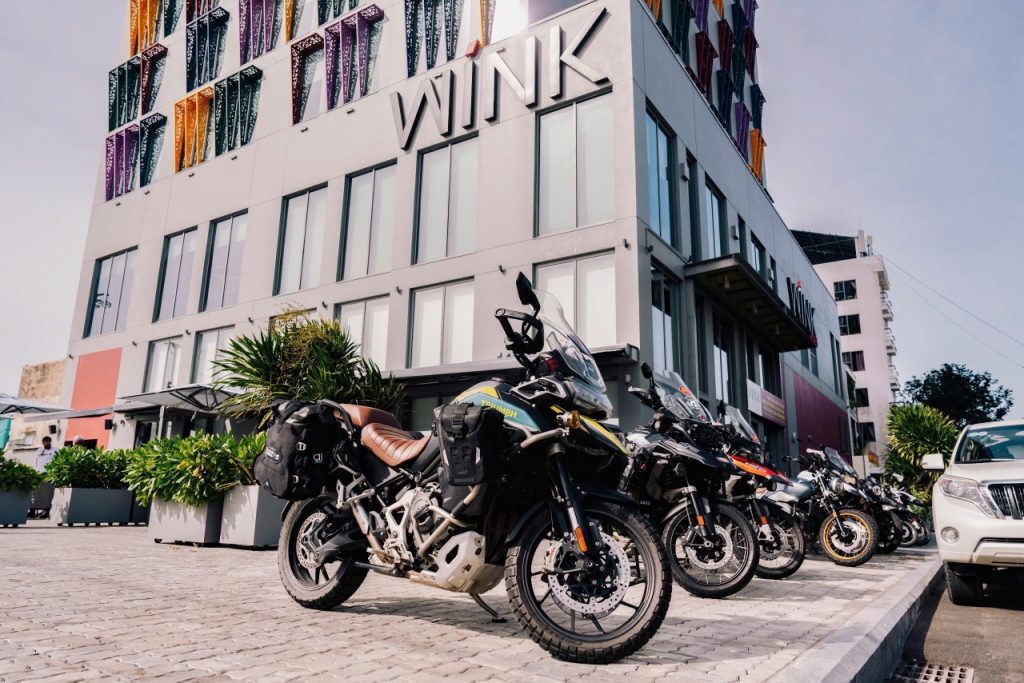
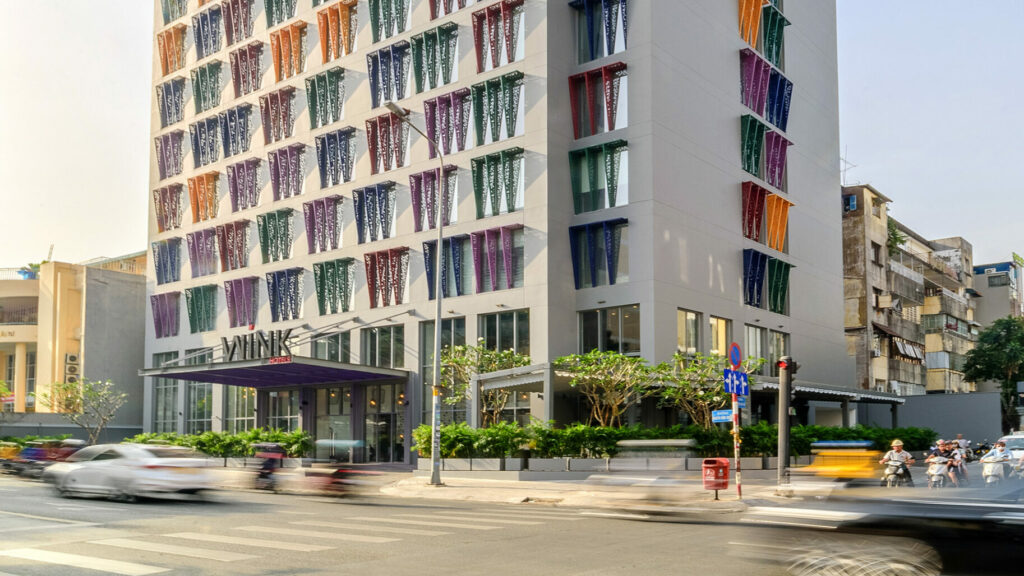
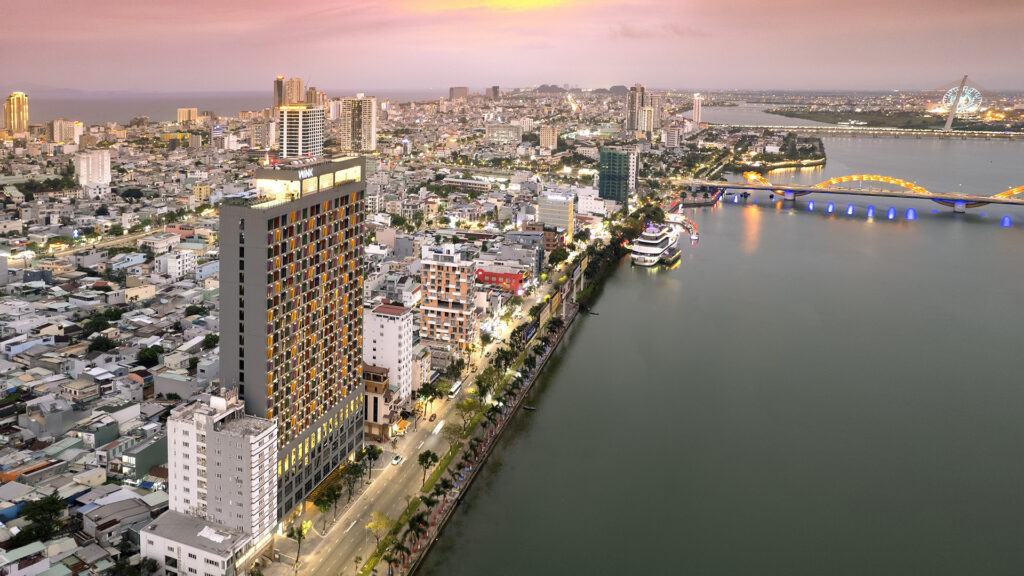
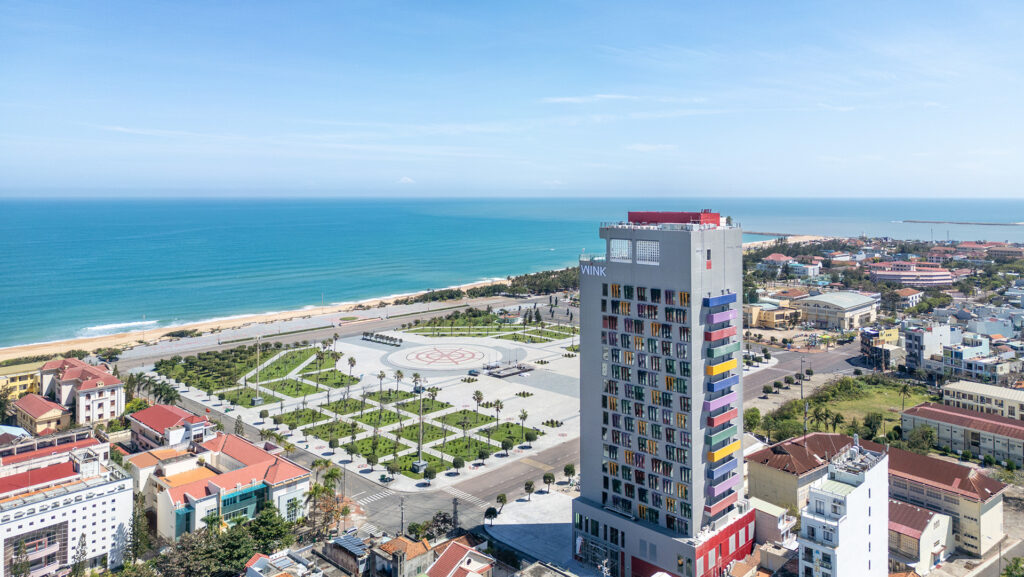
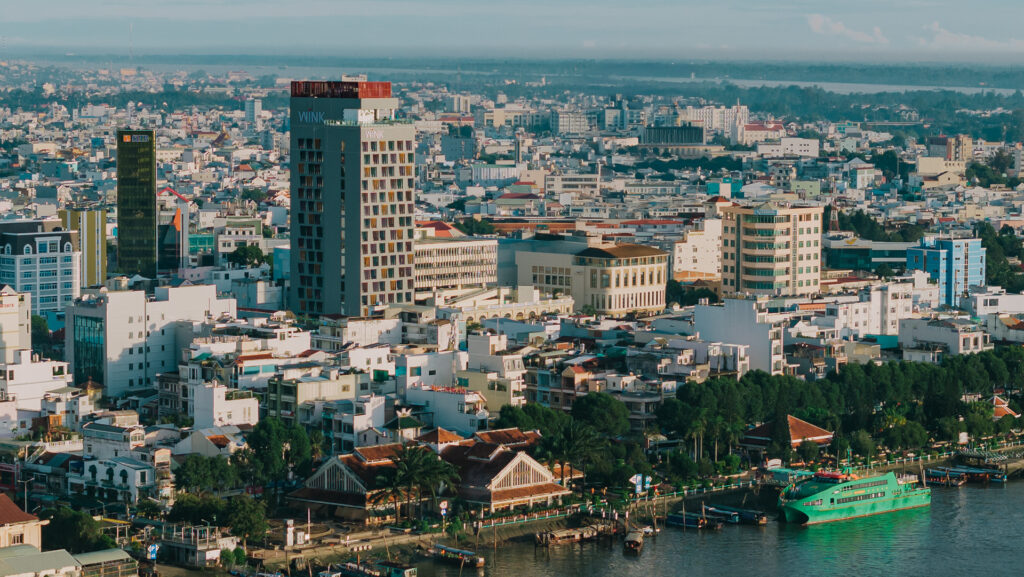
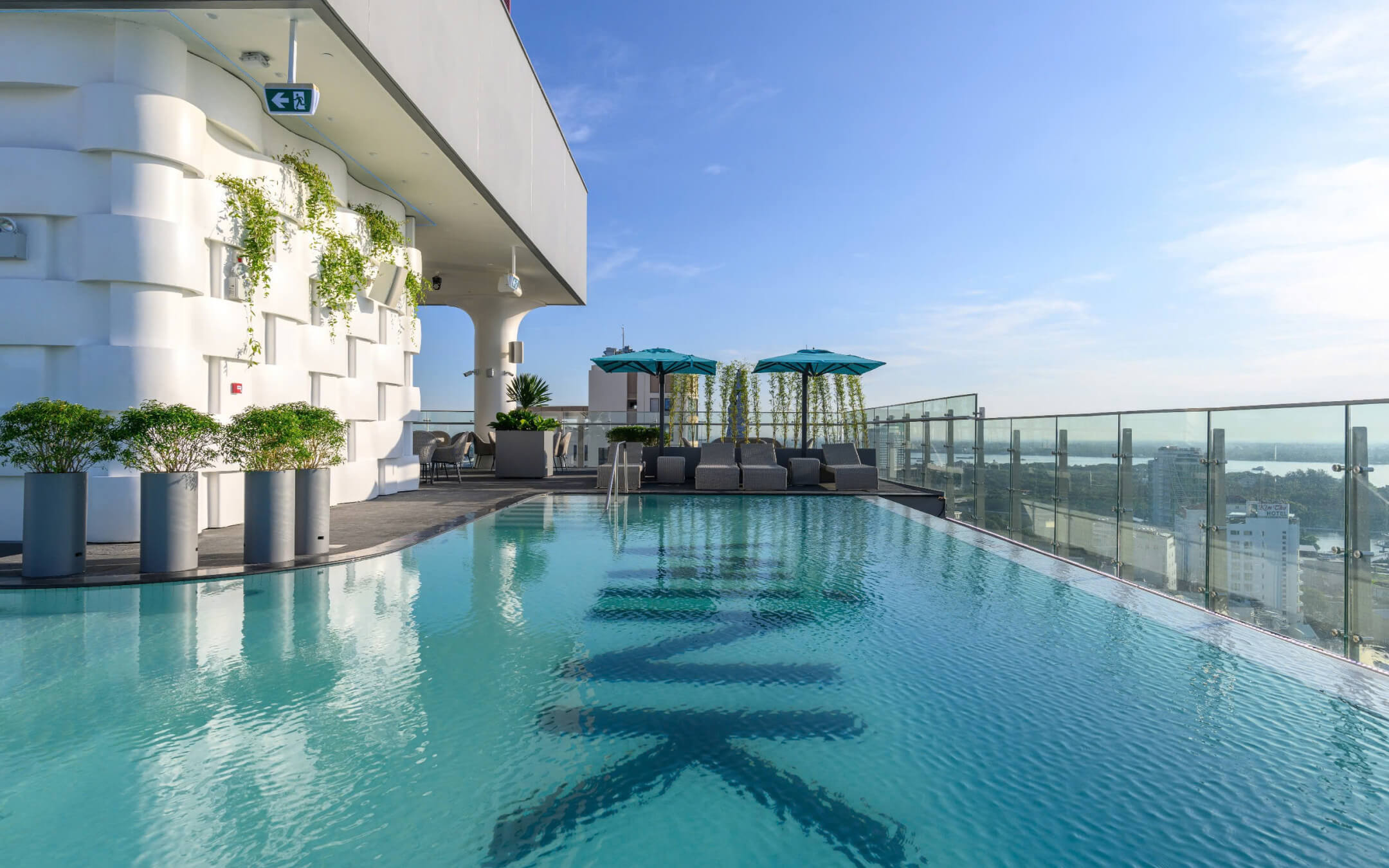
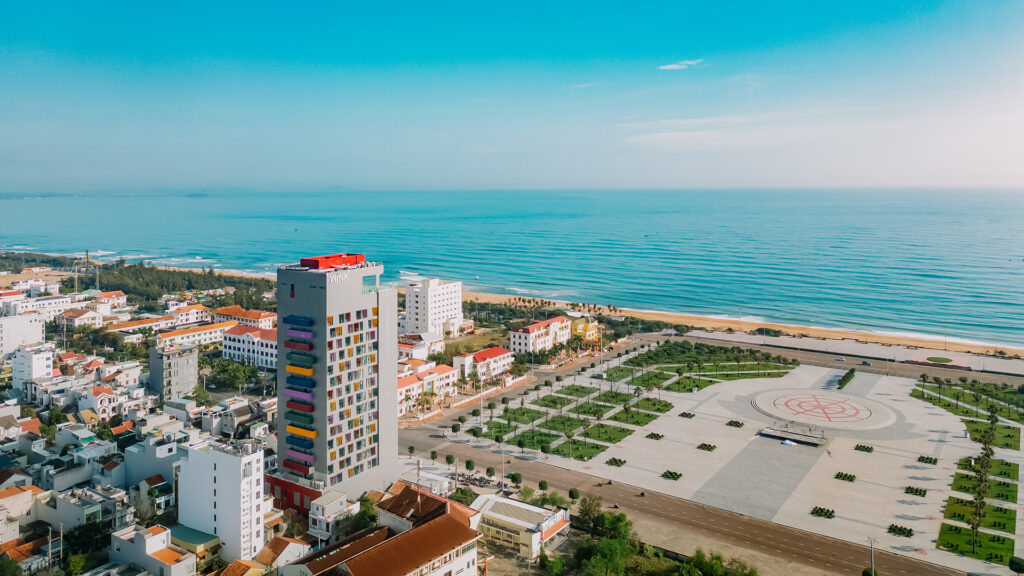
Wink Tuy Hoa Beach is where you stay while you do all of this. It sits at 1 Điện Biên Phủ, right next to April 1st Square, three minutes on foot from Tuy Hoa Beach, and with a rooftop infinity pool that has 360-degree views of the ocean, the city, and everything in between. A hotel that good, in a city this underrated, is a combination worth building a trip around.
Here’s the Tuy Hoa itinerary.
The Tuy Hoa Itinerary: Day 1 — The Beach, The Towers, The Food
Start Where The City Starts: Tuy Hoa Beach
Step out of Wink’s front door and you’re three minutes from one of central Vietnam’s finest stretches of sand — the first stop on any great Tuy Hoa itinerary. Tuy Hoa Beach runs for 10 kilometers along Doc Lap Street, wide and white and largely free of the beach vendors and tourist infrastructure that have taken over Nha Trang and Da Nang. On a weekday morning it’s almost entirely yours. This is not a beach that’s trying to impress anyone. It just is.
Go early. Walk south. Watch the fishing boats come in. Grab a coffee from one of the small café terraces that face the sea and let the city wake up around you. There’s a particular pleasure in being somewhere beautiful that hasn’t yet been discovered by the kind of people who put everything on Instagram. Tuy Hoa is, for now, still that place.
The Nghinh Phong Towers And April 1st Square
Right next to Wink — so close you can see them from the Wink Space — the Nghinh Phong Twin Towers are the defining landmark of modern Tuy Hoa. Two granite towers, 35 and 30 metres high respectively, standing two metres apart, their stepped design inspired by the basalt columns of the famous Ganh Da Dia Reef up the coast. The corridor between them is carved with scenes from the Vietnamese “Hundred Eggs” creation myth. At night they become a screen for 3D projection mapping shows that draw the whole city out onto the square. Worth two visits — once in daylight to understand the architecture, once after dark to watch it transform.
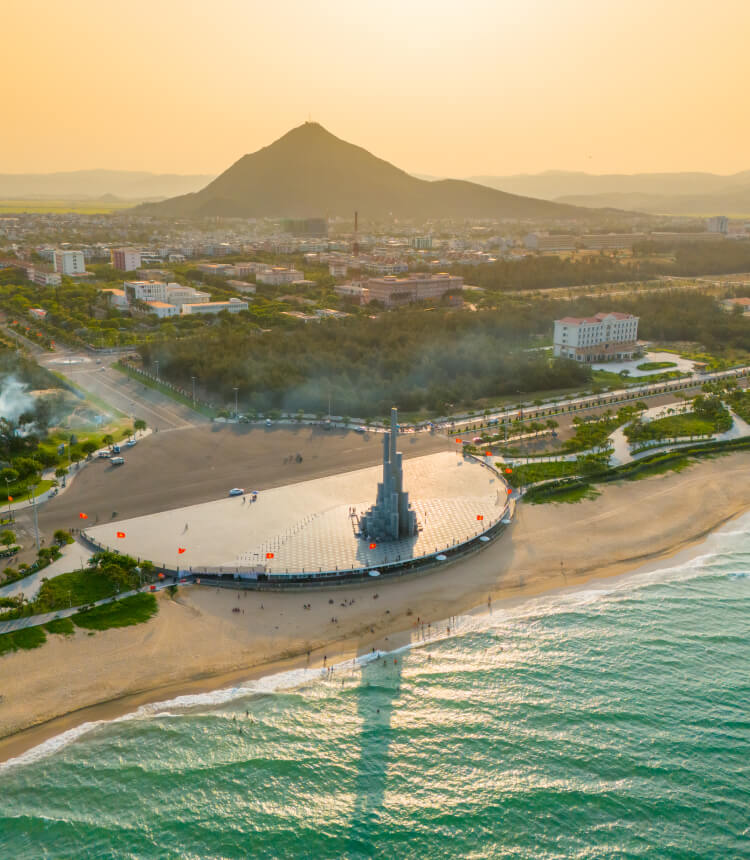
April 1st Square in front of the towers is exactly what a great city square should be: locals exercising in the morning, kids running between fountains in the evening, older residents on benches watching it all happen. Sit here long enough and you’ll understand Tuy Hoa without needing any further explanation.
Nhan Tower: The Ancient On The Hill
A short ride from the city centre — grab a Grab — takes you up to Nhan Tower, a 12th-century Cham temple perched on a hill overlooking Tuy Hoa and the Da Rang River. Built by the Cham people as a place of worship dedicated to the Hindu god Shiva, it’s a remarkable piece of brickwork that has endured nearly a thousand years of coastal weather. The hilltop setting gives you sweeping views over the city, four bridges, and the coastline stretching in both directions. Go in the late afternoon when the light is soft and the heat has lifted.
Note: Wear modest clothing if you plan to enter the inner chamber.
The Tuy Hoa Itinerary’s Most Important Meal
Every good Tuy Hoa itinerary has a non-negotiable food moment. This one has several, but let’s start with bún cá, the city’s signature dish — a clear, aromatic fish soup with rice vermicelli, fresh herbs, and the kind of clean, bright broth that makes you wonder why you’ve been eating anything else. It’s the kind of bowl that tastes like the sea smells.
Also look for bánh hỏi heo quay — delicate rice vermicelli bundles served with crispy roast pork — and cá ngừ đại dương, Tuy Hoa’s prized yellowfin tuna, which turns up everywhere here in everything from sashimi-style raw preparations to grilled skewers. This stretch of the central coast produces some of the best tuna in Vietnam, and in Tuy Hoa you eat it at source.
Ask the Wink team where to go — the hotel’s Wink Guides know every good spot within walking distance, and they’ll send you somewhere the tour buses don’t go.
Tuy Hoa Itinerary At Night: The Square After Dark
As the sun goes down, the whole city gravitates toward the seafront and April 1st Square. The Nghinh Phong Towers glow and the 3D mapping show begins. Street food vendors set up around the square. Families stroll the promenade. The breeze comes in off the ocean. It’s lovely in the way that unspoiled places are lovely — without effort, without performance.
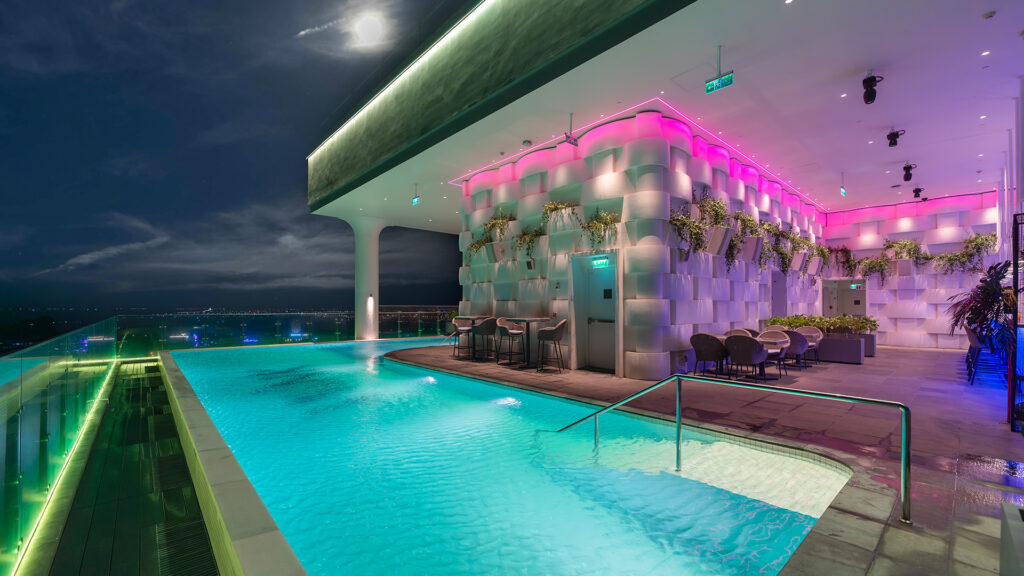
End the night at Wink’s Endless Summer Rooftop Pool & Lounge — the hotel’s 360-degree rooftop infinity pool with views over the city and the South China Sea. Tropical cocktails, inflatables, the sound of waves somewhere below. It’s open 24 hours. Use that knowledge wisely.
Tuy Hoa Itinerary: Day 2 — Ganh Da Dia And The Road North
The Tuy Hoa Itinerary’s Unmissable Day Trip: Ganh Da Dia
Day two of the Tuy Hoa itinerary calls for an early start and a motorbike. The destination is Ganh Da Dia — and if you’ve never heard of it, you’re about to understand why Phu Yen is generating serious travel buzz.
About 35 km north of Tuy Hoa along the coastal highway, Ganh Da Dia is a basalt reef formed by volcanic lava cooling against the sea millions of years ago. The result is thousands of hexagonal columns — perfectly geometric, fitting together like a vast natural mosaic, stretching across the headland and tumbling into the surf. It looks, frankly, unreal. The comparison people reach for is Giant’s Causeway in Northern Ireland. But Ganh Da Dia is wilder, more remote, and almost entirely crowd-free.
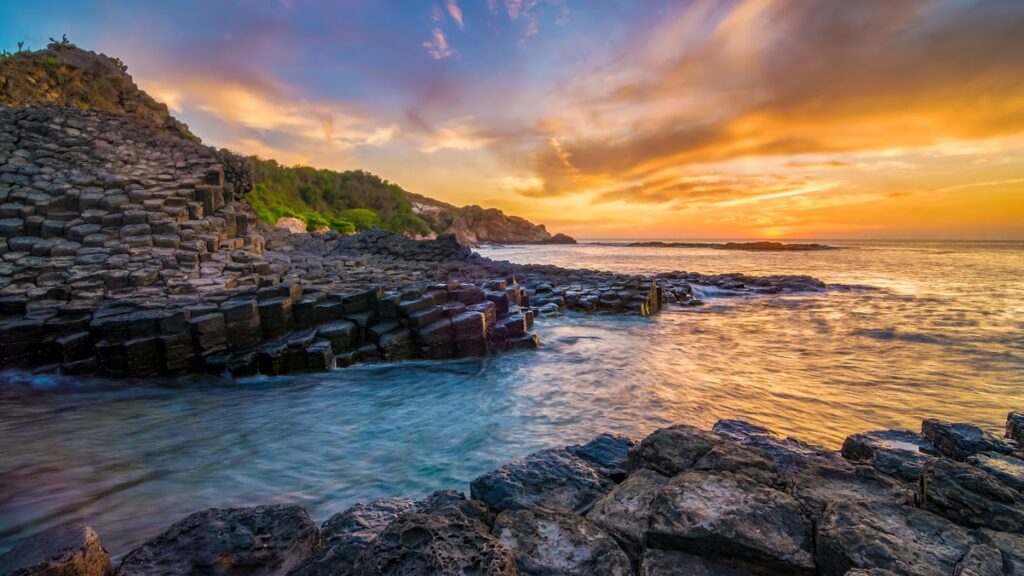
Go at low tide when you can walk across the columns. Go in the morning when the light hits the wet stone and turns everything silver. Take your time. This is what the Tuy Hoa itinerary is built around, and it earns it.
The road north from Tuy Hoa is a joy in itself — one of the most beautiful coastal drives in central Vietnam, winding between the mountains and the sea with almost no traffic. Rent a motorbike through the hotel (around 150,000 VND/day) or hire a driver if you’d prefer to just look at the view.
O Loan Lagoon: The One You’ll Dream About
On the way back from Ganh Da Dia, stop at O Loan Lagoon. This is a 1,800-hectare tidal lagoon sheltered behind a spit of land that curls out from the coast — calm, jade-green water surrounded by hills and fishing villages, coracles bobbing in the shallows, oyster and mussel farms strung across the surface. It’s one of the most tranquil and beautiful landscapes in central Vietnam, and almost nobody outside the region knows about it.
Pull over. Sit on the lagoon bank. Order a coffee from a local stall if you find one. Some places only require you to stop and look.
Mang Lang Church: An Unlikely Masterpiece
On the drive back toward Tuy Hoa, the Mang Lang Church is worth a detour — a 19th-century Gothic church in the hills above the Ky Lo River, surrounded by enormous shade trees and named after the mang lang tree whose purple flowers bloom across the grounds. Two steeples, stained-glass windows throwing coloured light across yellow walls, and a wooden ceiling that makes the interior feel like a different century entirely. It’s one of the most beautiful churches in central Vietnam, and very few visitors ever find it.
Back In Tuy Hoa: One Last Bowl, One Last Swim
Return to the city with enough time for a final meal — bún cá again, probably, because you’ll want it again — and a last swim at Wink’s rooftop pool before the day closes. Then a coffee at one of the seafront terraces near the square, watching the last boats come in off the water.
One of Tuy Hoa’s great gifts is that it never tries to rush you. The city has a tempo of its own — unhurried, coastal, confident in what it is. Two days here feels longer, in the best way. You leave slower than you arrived.
If You’ve Got One More Day: The Tuy Hoa Itinerary Extended To 3 Days, 2 Nights
Good. You’re staying. You made the right call.
The two-day Tuy Hoa itinerary covers the city and its great northern coast road. Day three goes in the opposite direction — south along the shore and up into the hills — and it’s a completely different kind of beautiful.
Morning: Up To Van Hoa Plateau
Set off early from Wink — grab breakfast before you go, the buffet is worth it — and head west into the hills above Tuy Hoa toward Van Hoa Plateau. About 40 km from the city, at 400 metres above sea level, Van Hoa is what locals reach for when they need relief from the coastal heat. The road up winds through fields of sugarcane, cassava and pepper, with the Da Rang River valley opening up below you as you climb.
At the top, the air is genuinely cool, the landscape is misty and green, and the pace drops several notches. This is the Tuy Hoa itinerary’s version of Da Lat — minus the crowds. Stop at one of the highland cafés for a coffee with a view, then walk the plateau trails through Ede ethnic village, visit Bac Ho Church set among the mist, and look out over the Ba Ha River Dam — an enormous artificial lake that sits in the mountain fold with a dreamlike stillness to it.
Van Hoa is not a destination for landmark-ticking. It’s a destination for breathing. Give it the morning.
Early Afternoon: Bai Xep — The Beach That Launched A Film
Head back down to the coast and south toward Bai Xep Beach — the small, crescent-shaped cove that became Vietnam’s most talked-about beach after it served as a filming location for Yellow Flowers on the Green Grass, the beloved Vietnamese film that put Tuy Hoa firmly on the domestic travel map. There’s an entrance fee (a few thousand VND — genuinely negligible), but what’s inside is one of the most photogenic beaches in central Vietnam: powder-white sand, clear turquoise water, a small fishing village tucked into the headland, and limestone outcrops that frame the whole thing like a painting.
Swim here. Take too many photos. Eat seafood from one of the small shacks at the edge of the beach. The grilled fish and boiled shellfish pulled straight from the boats that morning are as fresh as it gets.
Late Afternoon: Ganh Den Lighthouse & Pink Granite Cliffs
Just a short drive north of Bai Xep, and well before the crowds at Ganh Da Dia begin to build again, is Ganh Den Lighthouse — arguably the most visually striking spot on this entire Tuy Hoa itinerary, and one that far fewer visitors find. While Ganh Da Dia is famous for its black basalt hexagons, Ganh Den is its geological opposite: pale pink and cream granite boulders, polished by millions of years of surf into smooth, sculptural curves, with a colonial-era red lighthouse rising from the highest point above the sea.
Come at 4:30 PM when the sun is low and the pink granite glows amber-orange. Admission is free. There are almost no other tourists. This is the kind of place you find yourself returning to in your memory for years afterward.
Watch the sun go down from the rocks. Then ride back to Wink.
Evening: Wink’s Rooftop, One Last Time
Back in Tuy Hoa for the final night, do the only sensible thing: rooftop pool, tropical cocktail, the city spread out below you in lights. You’ve covered the coast, the highlands, the ancient and the geological, the famous and the overlooked. Three days on this Tuy Hoa itinerary, in a city most people skip. No regrets whatsoever.